

Sunscreen & Extensions: How to Protect Your Hair
Most extension wearers know to be careful around chlorine, saltwater, and excessive heat styling. What many don't realize is that some sunscreen products can also affect the appearance of human hair extensions.
The good news is that protecting your skin doesn't mean sacrificing your hair. By understanding which sunscreen ingredients are most compatible with hair extensions, you can enjoy the summer while helping your extensions stay soft, shiny, and true to color.
Can Sunscreen Damage Hair Extensions?
Yes, certain sunscreen products can contribute to discoloration, dryness, and buildup on human hair extensions.
This is especially true for lighter shades such as blonde, highlighted, silver, grey transition, and platinum hair extensions. Many extension wearers notice changes in color after spending time outdoors, at the beach, or by the pool and often assume chlorine is the culprit. In reality, sunscreen is sometimes the hidden cause.
Unlike your natural hair, extensions do not receive oils and nutrients from your scalp. As a result, they can be more susceptible to environmental damage and product buildup.
Why Some Sunscreens Cause Problems
Many popular sunscreens contain chemical UV filters that can react with minerals in water, chlorine, metals, and environmental pollutants.
Over time, these reactions can cause:
- Pink or peach discoloration
- Orange or yellow staining
- Dryness
- Dullness
- Increased tangling
- Reduced shine
Once discoloration occurs, it can be difficult and sometimes impossible to completely remove.
For that reason, prevention is always the best strategy.
Mineral vs. Chemical Sunscreen
While every formula is different, most extension professionals recommend choosing mineral-based sunscreens whenever possible.
Mineral sunscreens typically use:
- Zinc Oxide
- Titanium Dioxide
These ingredients sit on the surface of the skin to reflect UV rays rather than being absorbed like many chemical sunscreen ingredients.
Mineral formulas are generally considered the safest option for extension wearers because they are less likely to contribute to staining and discoloration.
Why Spray Sunscreens Are Often the Biggest Problem
The delivery method can be just as important as the ingredients.
Spray sunscreens create a fine mist that can easily settle onto your hair extensions, even when you're aiming for your skin. The product can build up throughout the day and become even more problematic when combined with heat, sweat, chlorine, or saltwater.
Whenever possible, choose a lotion or cream sunscreen and apply it carefully to avoid transferring product onto your hair.
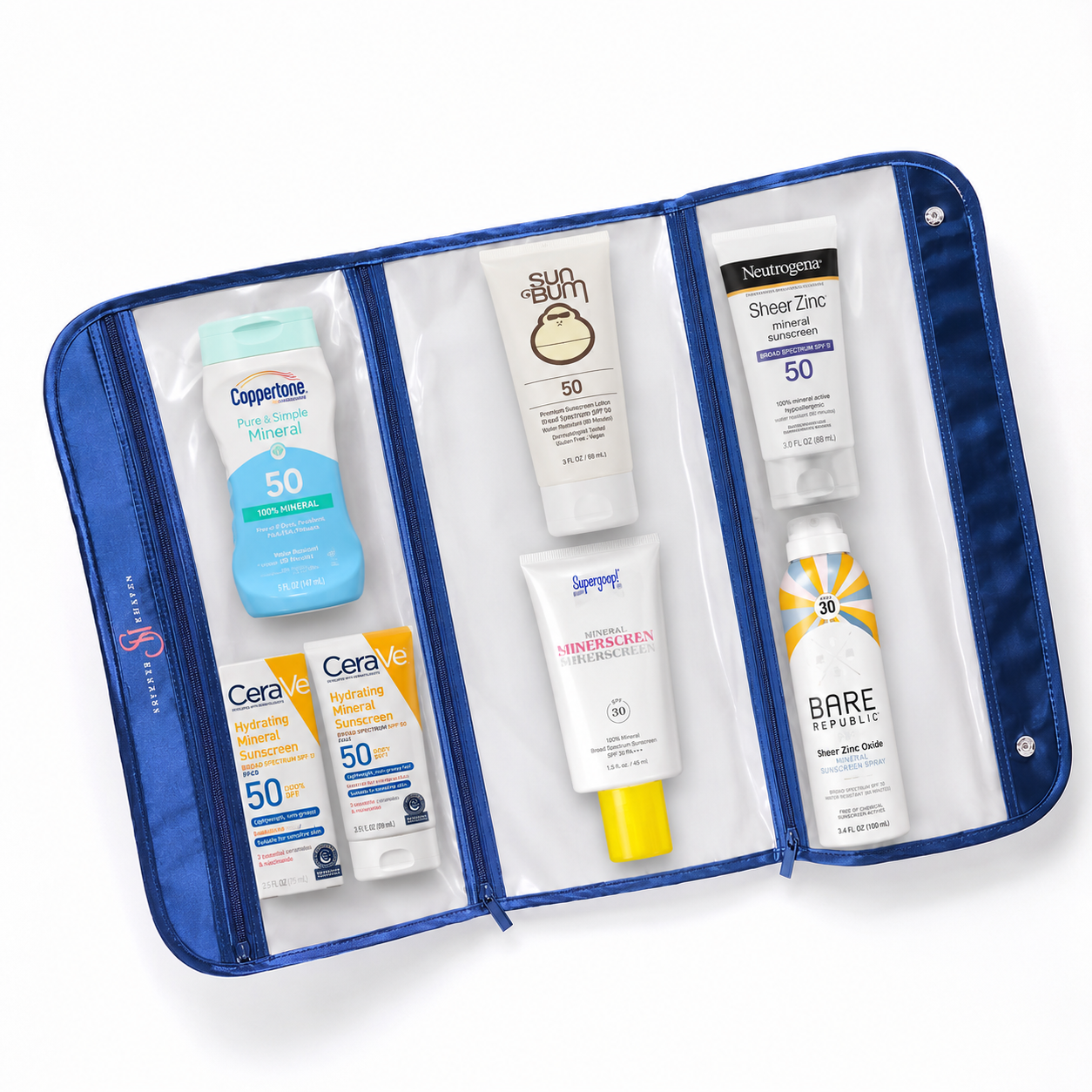
Extension-Friendly Sunscreens
The following sunscreens are commonly recommended by extension professionals because they rely primarily on mineral-based protection and are generally considered safer for human hair extensions.
- Coppertone Pure & Simple Mineral Sunscreen SPF 50
- CeraVe Hydrating Mineral Sunscreen SPF 50 Face Lotion
- CeraVe Hydrating Mineral Sunscreen SPF 50 Body Lotion
- Sun Bum Original SPF 50 Lotion
- Supergoop! Mineral Sheerscreen SPF 30
- Neutrogena Sheer Zinc Mineral Sunscreen SPF 50
- Bare Republic Sheer Zinc Oxide Spray SPF 30
As with any beauty product, manufacturers may change formulas over time. If you're unsure about a product, check the ingredients or ask your extension specialist before using it.
Sunscreens to Avoid With Hair Extensions
The following products are commonly flagged by extension professionals because of their formulas or aerosol application methods which may cause discoloration.
- Hawaiian Tropic Sheer Touch SPF 30
- Vacation Classic Whip SPF 50
- Sun Bum Original SPF 30 Spray
- Banana Boat Sport Ultra SPF 30 Spray
- Coppertone Sport 4-in-1 SPF 30 Spray
- Neutrogena Ultra Sheer Body Mist SPF 55
- Vacation Classic Lotion SPF 50
This doesn't necessarily mean these are bad sunscreens for your skin. The concern is simply their compatibility with human hair extensions.
Additional Summer Tips for Extension Wearers
Apply Sunscreen Before Styling Your Hair
Whenever possible, apply sunscreen before putting your hair down. Keep your extensions secured in a clip, braid, or ponytail while applying products.
Avoid Overspray
If you use any spray products, step away from your hair and apply them carefully. Be mindful of windy conditions that can carry product directly onto your extensions.
Rinse After Swimming
Whether you've been in a pool, lake, or the ocean, rinse your hair as soon as possible afterward to remove sunscreen residue, chlorine, salt, and minerals.
Use Professional Leave-In Products
A quality leave-in conditioner can help maintain moisture, reduce tangles, and provide additional protection from environmental stressors.
Brush Frequently
Summer activities often increase tangling. Carry an extension-safe brush and gently detangle throughout the day.
Schedule Maintenance Before and After Vacation
If you're planning a beach vacation, extended outdoor activities, or lots of time in the water, a maintenance appointment before and after your trip can help keep your extensions looking their best.
Protect Your Investment All Summer Long
Hair extensions are designed to fit your lifestyle. Whether you're swimming, traveling, working out, or spending time outdoors, a few smart product choices can help preserve the beauty and longevity of your hair.
Choosing an extension-friendly sunscreen is one of the easiest ways to protect your color, maintain softness and shine, and avoid preventable damage during the summer months.
If you're unsure whether a sunscreen is safe for your hair extensions, bring it with you to your next appointment. We'll be happy to help you choose products that keep both your skin and your hair protected.
Related Articles
Can I Swim and Work Out With Hair Extensions?
Hair Extension Care While on Vacation
Hair Extensions Denver: How to Keep Knots Out of Hair Extensions
Hair Extension Maintenance Guide